

Camo Compression Shirt: Best Training Pick in 2026
Best camo match: Physiquebodyware’s Light Compression Shirt Camo. Best sleeveless alternative: Classic Muscle Shirt. Best fitted tee alternative: Fitted T-shirt. This 2026 guide helps you choose a camo compression shirt by fit and training needs without confusing a close-fitting gym top with a compression garment.
- Physiquebodyware’s Light Compression Shirt Camo is the direct match for shoppers seeking a camo compression shirt.
- Classic Muscle Shirt suits lifters who want relaxed workout attire and low-cut armholes instead of compression.
- Fitted T-shirt suits gym-goers who want fitted shoulders and arms with a relaxed torso.
- Choose gym clothes by shoulder movement, chest comfort, and hem position—not camouflage alone.
Why this matters
A camo print tells you how a shirt looks. It does not tell you how the shirt fits, how its fabric behaves during training, or whether it delivers a measured level of compression.
Physiquebodyware’s Light Compression Shirt Camo is the best match here for gym-goers specifically shopping for a camo compression shirt. The alternatives below solve different problems: a sleeveless cut for exposed arms, or a fitted tee without an all-over close fit.
Choose the garment category first. If you want compression, do not substitute a muscle shirt simply because it looks good in the gym. If you want low-cut armholes, do not buy a compression shirt and expect the same coverage.
What makes the best camo compression shirt?
Use these five criteria for your 2026 shortlist. They separate a useful training shirt from a purchase based only on the print.
- Category match: Choose a product identified as a compression shirt when compression is your requirement. A fitted tee is a different option.
- Chest fit: Check the size guide and how the shirt sits across your chest. Do not use a smaller size as a shortcut to compression.
- Shoulder reach: Test the position you use for pressing and reaching overhead. Reject a fit that pulls against the movement.
- Hem position: Check where the hem sits while standing, reaching, and hinging. Decide how much torso coverage you want before ordering.
- Training coverage: Choose the neckline, sleeves, and arm openings that suit your workout. Camouflage does not settle those choices.
Treat fabric composition and care instructions as purchase checks, not assumptions. A product name containing compression does not establish moisture management, abrasion resistance, or a particular pressure rating.
Training shirts at a glance
Only the first pick below directly matches the camo compression query. The other two are gym-top alternatives, not competing camouflage compression shirts.
| Item | Best for | Standout feature | Key limitation |
|---|---|---|---|
| Light Compression Shirt Camo | Shoppers specifically seeking a camo compression shirt | Direct match for camouflage and the light-compression category | The product name does not establish a measured compression level |
| Classic Muscle Shirt | Lifters wanting relaxed, sleeveless workout attire | Relaxed fit and low-cut armholes | Not a compression-shirt substitute |
| Fitted T-shirt | Gym-goers wanting fitted arms and shoulders without a close-fitting torso | Fitted chest, arms, and shoulders with a relaxed torso | Does not meet the specific camo compression requirement |
The table is a decision tree, not a claim that every top performs the same job. Start with the first row if camouflage and compression are both requirements. Use the alternatives only if your real priority is a different fit.
1. Light Compression Shirt Camo: best for the exact search
Light Compression Shirt Camo is the direct product match for this guide. Its name identifies both the camouflage pattern and the light-compression category; that makes it the starting point rather than a loosely related gym tee.
For your 2026 purchase, check the current product details against the way you train. Confirm the fabric, sizing guidance, and coverage before deciding whether the shirt belongs in your workout rotation.
Light Compression Shirt Camo pros:
- Matches the camouflage requirement rather than offering a different print.
- Identifies itself as a light-compression shirt rather than a general fitted tee.
- Keeps the buying decision focused on the garment category you searched for.
Light Compression Shirt Camo cons:
- Light compression is not a stated numerical pressure rating.
- A close-fitting shirt is the wrong category if you prefer loose torso coverage.
- The name alone does not establish sweat handling or recovery benefits.
Best for: Gym-goers who specifically want camouflage in a light-compression shirt, rather than a muscle shirt or conventional tee.
Do not size down to chase a tighter feel. Follow the product’s sizing guidance and assess the fit against your chest and shoulders. A shirt that interrupts your pressing position is not a useful training choice, regardless of how it looks standing still.
Verdict: Buy if camouflage and light compression are your requirements and the sizing guidance matches your measurements.
2. Classic Muscle Shirt: best for relaxed sleeveless training
Classic Muscle Shirt offers a relaxed fit with low-cut armholes. It is a sleeveless muscle tee, so it belongs on your shortlist when exposed arms and a less fitted cut matter more than compression.
This is a category change, not an equivalent replacement. Choose Classic Muscle Shirt because you want its cut, not because you expect a relaxed muscle shirt to work like a camo compression shirt.
Classic Muscle Shirt pros:
- Relaxed fit suits shoppers who do not want an all-over close fit.
- Low-cut armholes provide an open sleeveless cut.
- Muscle-tee styling fits a straightforward gym-clothes wardrobe.
Classic Muscle Shirt cons:
- It is not a compression shirt.
- Low-cut armholes provide less side coverage than a more enclosed cut.
- It does not answer a requirement for a camouflage compression top.
Best for: Lifters who want a relaxed muscle shirt and deliberately prefer less coverage around the arms.
Check the arm openings as carefully as the chest. If you want more side coverage, the low-cut armholes are a reason to choose another style, not a detail to ignore.
Verdict: Buy for relaxed sleeveless training; skip as a camo compression substitute.
3. Fitted T-shirt: best for fitted shoulders and a relaxed torso
Fitted T-shirt is fitted through the chest, arms, and shoulders while keeping the torso relaxed. Its product description also identifies it as soft and lightweight.
That fit distribution matters. You can choose a defined upper-body fit without choosing a shirt intended to sit closely across the entire torso.
Fitted T-shirt pros:
- Fitted chest, arms, and shoulders give you a defined upper-body cut.
- A relaxed torso suits shoppers who dislike a close fit around the midsection.
- The product description identifies a soft, lightweight feel.
Fitted T-shirt cons:
- A fitted cut does not make it a compression garment.
- The relaxed torso will not suit shoppers wanting an all-over close fit.
- It does not satisfy the specific camouflage requirement of this guide.
Best for: Gym-goers who want a fitted tee through the upper body without choosing compression across the torso.
Assess the shoulder fit separately from the waist. Do not size down just to remove the intended torso room; that changes the fit at the chest and arms too.
Verdict: Buy for fitted-tee training; skip if camouflage and compression are non-negotiable.
Check the fit before you commit
Run through 3 movements when assessing your training shirt: an overhead reach, a pressing position, and a hip hinge. These are practical fit checks, not a performance test or a substitute for the size guide.
Chest fit
Stand normally, then take a comfortable full breath. Check whether the neckline and chest stay comfortable without pulling the garment into a position you need to keep adjusting.
Separate close contact from a poor fit. You should choose the size recommended for your measurements, not the smallest shirt you can put on.
Shoulder reach
Raise your arms overhead, then bring them into your usual pressing position. Notice any pulling across the shoulders or underarms.
If the shirt interrupts those positions, reassess the size or garment cut. Do not assume that every restriction is simply what compression feels like.
Hem position
Hinge forward and reach again. Check whether the hem leaves you with the torso coverage you want.
Some shoppers prefer a close base layer; others want a top that sits more loosely. Decide which fit you want before treating the hem position as acceptable or unacceptable.
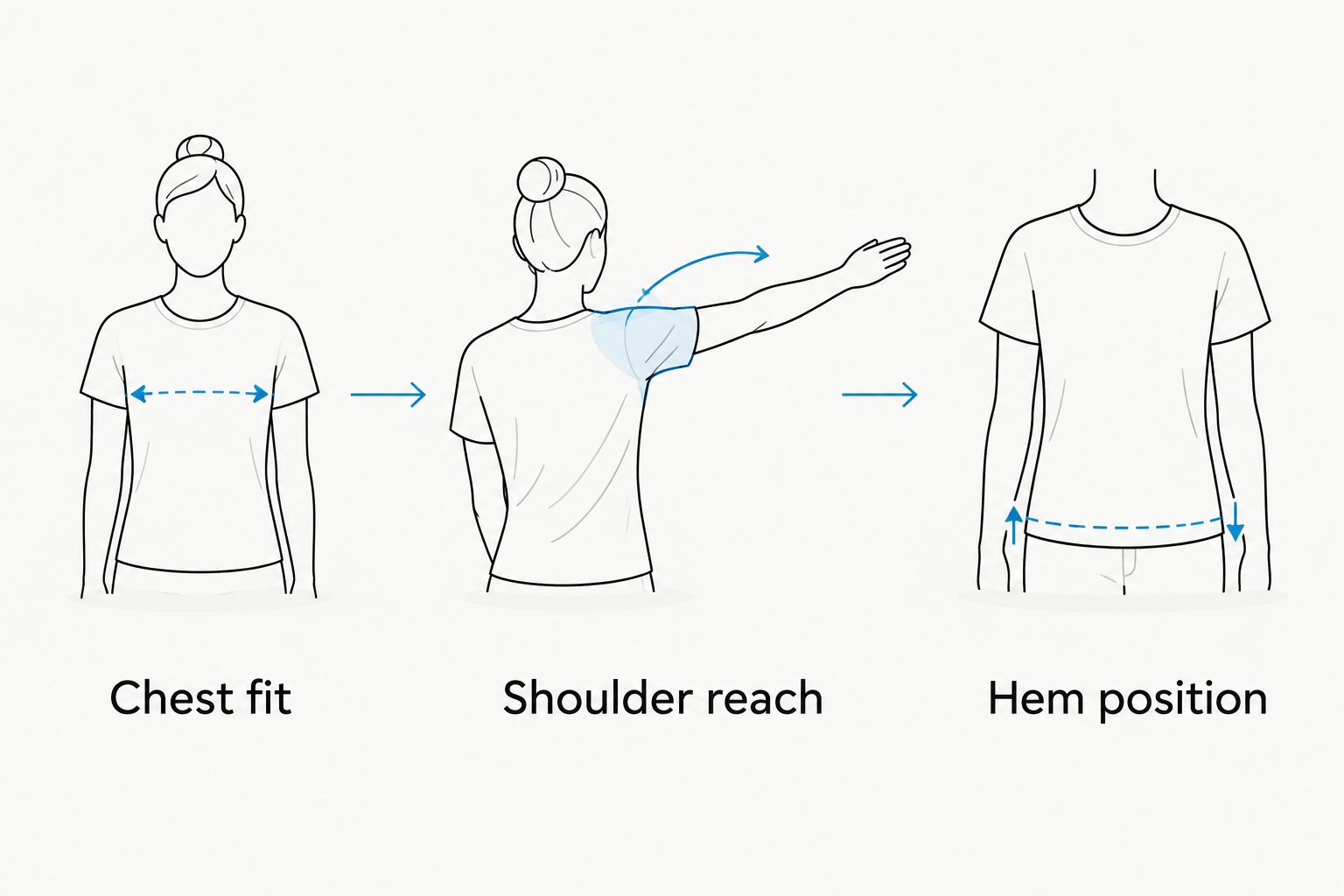
Finish with 2 fit checks: wear the shirt alone, then assess it beneath your usual training layer if you plan to layer it. Keep the outfit simple so you can tell which garment causes pulling or bunching.
When a different gym top is the better choice
A compression shirt is not the default answer for every lifting session. Choose it because you want that fit, not because the word compression sounds more technical than muscle shirt or workout tee.
For sleeveless training, compare the cut rather than the print. Stringer tank tops and muscle shirts are distinct gym-top categories; pay attention to their arm openings and chest coverage before choosing between them.
For a fitted tee, focus on where the fit is close and where it is relaxed. Fitted T-shirt explicitly separates the fitted upper body from the relaxed torso. That is useful information when your main objection to compression is the fit around your midsection.
Physiquebodyware’s gym-top alternatives make sense when your priority changes from camouflage compression to relaxed arm openings or a fitted tee. They do not need to be presented as compression products to be useful training options.


How the picks are ranked
This 2026 ranking puts exact category match first, then separates the alternatives by their stated fit. Light Compression Shirt Camo addresses the primary search; Classic Muscle Shirt addresses relaxed sleeveless training; Fitted T-shirt addresses a fitted upper body with a relaxed torso.
The criteria are category match, chest fit, shoulder reach, hem position, and coverage. This is a product-selection guide, not a lab-tested ranking of compression pressure or exercise performance.
Which training shirt should you choose?
Choose Light Compression Shirt Camo when your requirement is a camo compression shirt. Check the current sizing and fabric details, then make sure the cut suits your training positions.
Choose Classic Muscle Shirt when you want relaxed sleeveless workout attire. Choose Fitted T-shirt when you want fitted shoulders and arms but room through the torso.
For an undecided shopper in 2026, the simplest rule is to keep your original requirement intact. Do not replace a camouflage compression shirt with a different gym top unless you have decided that fit or coverage matters more than compression and print.
FAQ
What’s the best camo compression shirt in this guide?
Physiquebodyware’s Light Compression Shirt Camo is the best match for the specific camo compression shirt search. Confirm the current sizing, fabric, and coverage details before choosing your size.
Is a fitted T-shirt the same as a compression shirt?
No, a fitted T-shirt is not the same garment category as a compression shirt. Fitted T-shirt has fitted chest, arms, and shoulders with a relaxed torso, so choose it for that cut rather than for compression.
Should I size down in a camo compression shirt?
Do not size down simply to create a tighter feel. Use the product’s size guide and check chest comfort, shoulder movement, and hem position against your measurements.
Is Classic Muscle Shirt better for sleeveless workouts?
Classic Muscle Shirt is the better match here if you specifically want a relaxed sleeveless top with low-cut armholes. It is not a replacement for a compression garment.
Does camouflage make a workout shirt perform better?
Camouflage is a pattern, not evidence of training performance. Assess the shirt’s stated fabric, cut, care instructions, and fit separately from its appearance.
Can I wear a compression shirt under another gym top?
You can assess a compression shirt as a base layer, but check the fit with the outer garment you intend to wear. Reach overhead and hinge forward to identify pulling or bunching between layers.
What should I check before buying a compression shirt in 2026?
Check the current size guide, fabric description, coverage, and care instructions. Choose by your measurements and training needs rather than assuming every compression-labelled shirt has the same properties.
One last thing
Your shirt does not need to be equally tight everywhere. Fitted T-shirt deliberately combines fitted shoulders, arms, and chest with a relaxed torso; Classic Muscle Shirt deliberately uses a relaxed sleeveless cut.
For your 2026 training wardrobe, choose 1 base layer that matches the fit you actually want. Start with the camo compression option if that is your requirement, and change categories only for a clear reason.