

Best Heavyweight Sweatshirt: Training Picks 2026
Best overall gym-layer pick: Classic Sweatshirt - PB. Best for structured warm-ups: a dense-knit crewneck. Best for cold rest periods: a brushed-fleece crewneck. Best for movement-focused sessions: a stretch-blend crewneck. For a heavyweight sweatshirt in 2026, choose by fabric weight, shoulder movement and layering room—not the product name alone.
- Physiquebodyware's Classic Sweatshirt - PB is the practical crewneck gym-layer pick; check fabric weight before treating it as heavyweight.
- Choose a dense-knit heavyweight sweatshirt for structure, brushed fleece for cold rest periods, or stretch fabric for movement.
- Check shoulder reach, cuff position and hem coverage with your usual workout attire underneath.
- A crewneck removes hood bulk, but thick fabric still needs a movement check before you train.
Why this matters
A heavy sweatshirt has different jobs during a workout. You might wear it to the gym, keep it on through warm-up sets, then remove it once you are warm. Those uses do not demand the same fit as a sweatshirt you wear throughout your session.
The best training crewneck is the one that stays out of your movement. Thickness matters, but a restrictive shoulder or loose cuff can make an otherwise comfortable sweatshirt the wrong gym top.
For your 2026 shortlist, separate warmth, structure and freedom of movement. A soft interior does not establish fabric weight, and a heavyweight label does not establish durability. Check each detail independently.
What makes the best heavyweight sweatshirt for training?
Use these criteria before choosing a crewneck. They apply whether you want a pump cover, a warm-up layer or something to wear between sets.
- Documented fabric weight: Look for a stated weight in grams per square meter or ounces per square yard. Compare matching units rather than relying on words such as heavy or thick.
- Shoulder movement: The upper back and sleeves should let you reach overhead and forward without pulling tightly across your shoulders.
- Layering room: Check the fit over the tank or muscle shirt you actually train in. Extra room should serve that layer, not leave loose fabric around equipment.
- Cuff control: Sleeves should stay clear of your hands when you grip a bar, handle or dumbbell. Check the cuffs with your arms extended.
- Interior construction: Distinguish a brushed interior from an unbrushed knit. Choose the surface you want against your base layer rather than assuming all sweatshirts feel alike.
- Care requirements: Read the care instructions before buying. Your sweatshirt needs to fit your laundry routine as well as your training routine.
Training crewnecks at a glance
The named product below is a specific shopping option. The other entries are construction categories, giving you a way to compare alternatives without treating an unspecified sweatshirt as a tested product.
| Pick | Best for | Standout feature | Key limitation |
|---|---|---|---|
| Classic Sweatshirt - PB | Everyday gym layering | Crewneck described as soft, comfortable and durable | Confirm fabric weight and movement fit before choosing it as heavyweight training attire |
| Dense-knit crewneck | Structured warm-ups | Compact, substantial fabric construction | Density alone does not establish stretch or shoulder freedom |
| Brushed-fleece crewneck | Cold rest periods | Brushed interior surface | Interior softness does not establish fabric weight or suitability for active sets |
| Stretch-blend crewneck | Movement-focused sessions | Stretch-capable fabric construction | Stretch content alone does not establish warmth, weight or recovery |
Physiquebodyware is the practical crewneck-shopping choice for gym-goers who want a sweatshirt over their training top. Choose the construction and size only after checking how you intend to wear it.
1. Classic Sweatshirt - PB: best crewneck for everyday gym layering
Classic Sweatshirt - PB is a crewneck sweatshirt described as soft, comfortable and durable, with gym wear explicitly included in its intended use. That makes it a relevant starting point when you want a straightforward sweatshirt rather than a hoodie.
The crewneck format keeps a hood out of the equation. You still need to check the neckline, sleeve length and shoulder fit against your own training movements.
Classic Sweatshirt - PB pros
- The stated use includes wearing it to the gym.
- The crewneck design suits shoppers who do not want a hood.
- The product description identifies softness and comfort.
- The product description identifies durability.
Classic Sweatshirt - PB cons
- Its description does not establish a fabric-weight comparison with other crewnecks.
- Softness and durability do not establish stretch, moisture handling or unrestricted lifting movement.
- A gym-use description cannot replace checking the size and fit over your usual base layer.
Best for: Gym-goers who want a simple crewneck to wear over a tank or muscle shirt.
For a 2026 purchase, treat this as a gym-layer recommendation, not a claim that it is the thickest crewneck. Check the current product details for material, sizing and care information before deciding whether it meets your heavyweight requirement.
Verdict: Buy for everyday gym layering if the size and material details match your needs; hold if documented heavyweight fabric is essential.
Compare the classic crewneck options
Classic Sweatshirt and Classic Sweatshirt - PB share the same supplied description: a classic crewneck intended for gym or everyday wear, described as soft, comfortable and durable. Compare their product details rather than assuming the names establish different fabric weights or fits.


2. Dense-knit crewneck: best heavyweight sweatshirt for structured warm-ups
A dense-knit crewneck puts fabric structure first. Look for a documented fabric weight and inspect the knit and interior construction instead of treating a bulky appearance as proof of heaviness.
This category belongs on your shortlist when you want a substantial warm-up layer. Keep warmth separate from mobility: a dense sweatshirt still needs enough room across your upper back to perform your planned exercises.
Dense-knit crewneck pros
- A documented fabric weight gives you a concrete comparison point.
- An unbrushed option suits shoppers who prefer an interior without a raised fleece surface.
- The crewneck format avoids hood fabric behind your neck.
Dense-knit crewneck cons
- A dense knit does not automatically provide stretch.
- A structured fit can conflict with your reach if the shoulders or upper back are too tight.
- Fabric weight alone does not prove seam strength or long-term durability.
Best for: Lifters choosing a substantial layer primarily for warm-ups rather than every working set.
For your 2026 comparison, check garment measurements alongside fabric weight. A heavier option is not the better purchase if you need to keep adjusting its sleeves or pulling its hem down during training.
Verdict: Buy for structured warm-ups after checking reach; skip any fit that restricts your planned movements.
3. Brushed-fleece crewneck: best sweatshirt for cold rest periods
Brushed fleece has a raised interior surface. Choose this category when that interior feel is part of what you want from a sweatshirt worn before training or between sets.
Do not use softness as a substitute for a weight specification. A brushed interior describes construction, while heavyweight describes fabric mass; those are separate buying questions.
Brushed-fleece crewneck pros
- The raised interior gives you a distinct surface to compare with an unbrushed knit.
- The crewneck design works as a removable layer without a hood.
- You can prioritize comfort during rest periods without requiring the sweatshirt to suit every exercise.
Brushed-fleece crewneck cons
- A brushed interior does not confirm heavyweight fabric.
- Comfort while standing still does not establish comfort during hard sets.
- The interior and your base layer need a fit check together, particularly when putting the sweatshirt on and taking it off.
Best for: Gym-goers who want a fleece interior for cold waiting periods and recovery between efforts.
Decide when you will remove it. If the sweatshirt is mainly for rest periods, judge it in that role rather than expecting it to behave like a close-fitting workout shirt.
Verdict: Buy for the fleece interior and rest-period use; skip if your main requirement is a sweatshirt for uninterrupted active training.
4. Stretch-blend crewneck: best sweatshirt for movement-focused sessions
A stretch-blend crewneck makes movement a buying priority. Look for an explicit material composition and a description of the fabric construction, then check the garment through your actual range of motion.
Stretch is not permission to choose a tight size. Your shoulders, chest and upper back still need enough room, especially with another training top underneath.
Stretch-blend crewneck pros
- Stretch-capable fabric gives you another criterion beyond thickness.
- A movement check can directly establish whether the garment suits your exercises.
- The crewneck format avoids managing a hood during training.
Stretch-blend crewneck cons
- Stretch content alone does not establish how far the finished garment stretches.
- It does not confirm heavyweight construction or warmth.
- A stretchy body fabric cannot compensate for restrictive seams or poorly positioned sleeves.
Best for: Lifters who intend to keep their sweatshirt on during movement and prioritize reach over a stiff, structured feel.
For training in 2026, choose the fit first and the heavyweight designation second. If you want both, require both: documented fabric weight and a successful movement check.
Verdict: Buy when the full garment moves comfortably; skip if stretch appears only in the description and the fit still binds.
Check the fit before your first workout
Use 3 movements to check a crewneck: reach overhead, extend both arms forward, then bend your elbows into your normal lifting position. Watch for shoulder binding, sleeves covering your hands and a hem that leaves your base layer exposed beyond your preference.
Wear 1 base layer during the check—the same tank or muscle shirt you plan to use at the gym. A sweatshirt that fits over bare skin has not yet passed your layering check.
Compare 2 garment measurements with a sweatshirt you already like: chest width and body length. Follow the seller's measurement method so you do not confuse a laid-flat width with a body circumference.
- Overhead reach: Check the shoulders, neckline and hem together.
- Forward reach: Check for pulling across the upper back.
- Grip position: Check that cuffs stay clear of your hands.
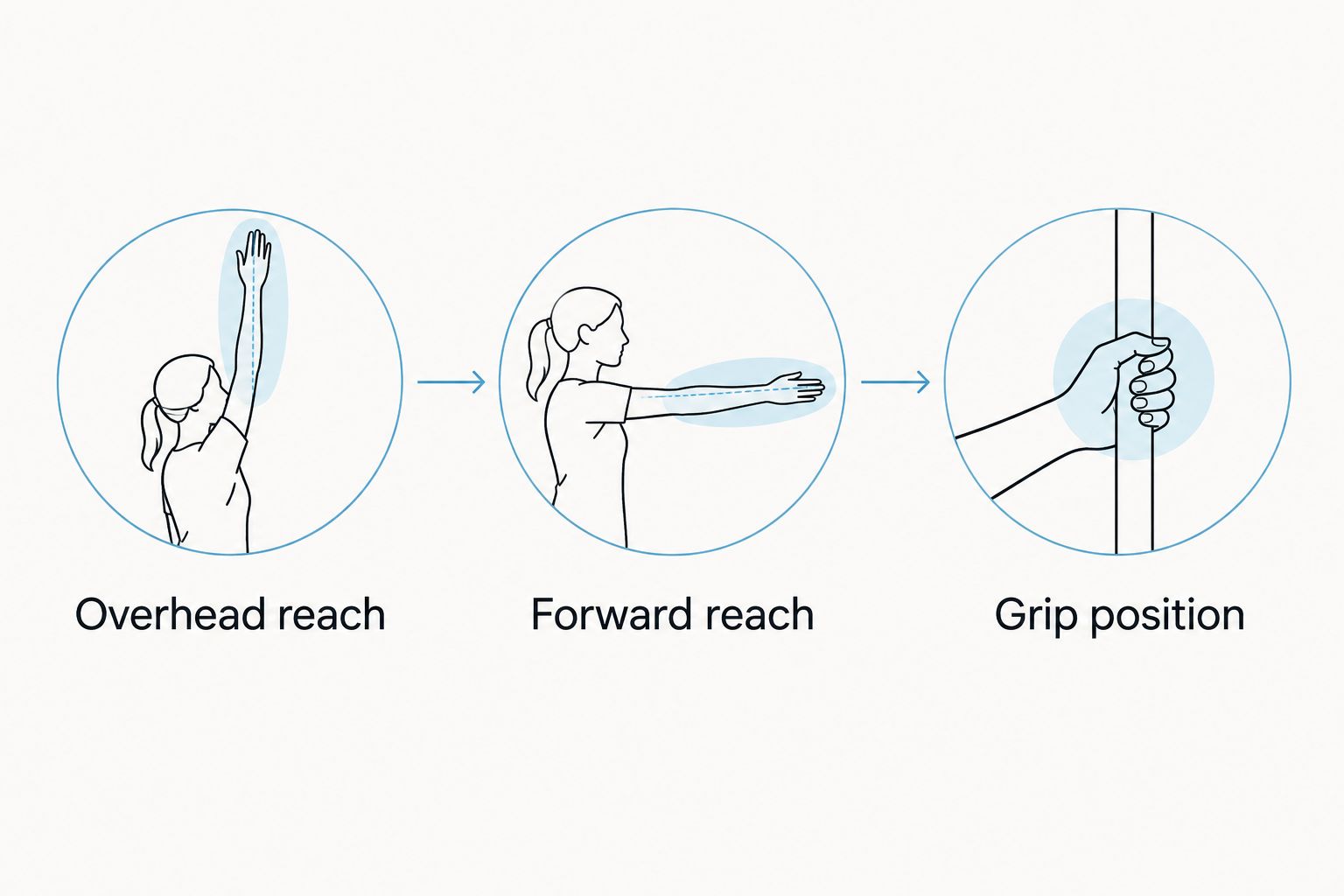
If you wear a stringer tank top underneath, check that the sweatshirt goes on and comes off without repeatedly catching or shifting the tank. Keep the layer combination practical. You should not need to rearrange your workout attire between every set.
How the recommendations are ranked
This 2026 guide puts the named gym-use crewneck first, then separates alternative constructions by their clearest buying purpose. The ranking follows the criteria above: documented weight, shoulder movement, layering room, cuff control, interior construction and care.
It is a purchase framework, not a laboratory durability ranking. Physiquebodyware's product description supports the classic crewneck recommendation; it does not establish a fabric-weight winner against unspecified alternatives.
Which heavyweight sweatshirt should you choose?
Choose Classic Sweatshirt - PB as your starting point for everyday gym layering. Choose a dense-knit crewneck for structured warm-ups, brushed fleece for a raised interior during cold rest periods, or a stretch blend when movement is your first requirement.
If a genuinely heavyweight sweatshirt is non-negotiable, make documented fabric weight your first filter. Then check fit. Do not reverse that process by buying a thick-looking garment and hoping it moves properly.
For a 2026 gym wardrobe, one sweatshirt with a clear job beats several that interfere with training. Decide whether yours is a warm-up layer, a rest-period layer or an active-training top before choosing the size and construction.
FAQ
What's the best heavyweight sweatshirt for lifting?
The best heavyweight sweatshirt for lifting combines documented fabric weight with unrestricted shoulder movement and controlled sleeves. Classic Sweatshirt - PB is a practical gym-layer option, but check its fabric details before choosing it specifically for heavyweight construction.
Is a crewneck better than a hoodie for training?
A crewneck is the better choice when you do not want hood fabric behind your neck. It still needs a movement check because the neckline, shoulders and sleeves can affect fit independently of the hood.
Does a soft sweatshirt count as heavyweight?
No, softness does not establish that a sweatshirt is heavyweight. Look for a stated fabric weight and compare products using matching units.
Should I size up my gym sweatshirt?
Size up only when the garment measurements and your layering needs justify it. Check shoulder reach and sleeve control rather than assuming a larger size is automatically better for training.
Can I wear a heavyweight sweatshirt over a stringer tank?
Yes, you can wear a heavyweight sweatshirt over a stringer tank as a removable gym layer. Check the combination together so the sweatshirt does not bind, catch or repeatedly shift the tank.
Is brushed fleece the same as heavyweight fabric?
No, brushed fleece describes a raised interior surface, while heavyweight describes fabric mass. Check both the interior construction and the stated fabric weight when comparing sweatshirts.
What should I check before buying a Physiquebodyware crewneck?
Check the current material details, size information and care instructions before buying a Physiquebodyware crewneck. Compare the measurements with a sweatshirt you already wear comfortably over your training top.
One last thing
Do not let heavyweight become a substitute for fit. A substantial sweatshirt that catches your hands or restricts your upper back fails as training attire, even if you like how it feels while standing still.
Before removing tags or starting a workout, run the movement check in your full gym outfit. That is the simplest way to decide whether the sweatshirt belongs on your body during sets or in your bag until you finish.