

Straight Leg Sweat Pants: Best Fits for 2026
Best overall: relaxed straight-leg sweatpants for muscular thighs; best for a cleaner silhouette: regular straight-leg sweatpants; best for layering: wide straight-leg sweatpants. This 2026 guide explains how to choose straight leg sweat pants by thigh room, waistband stability, and hem clearance—not by a size label alone.
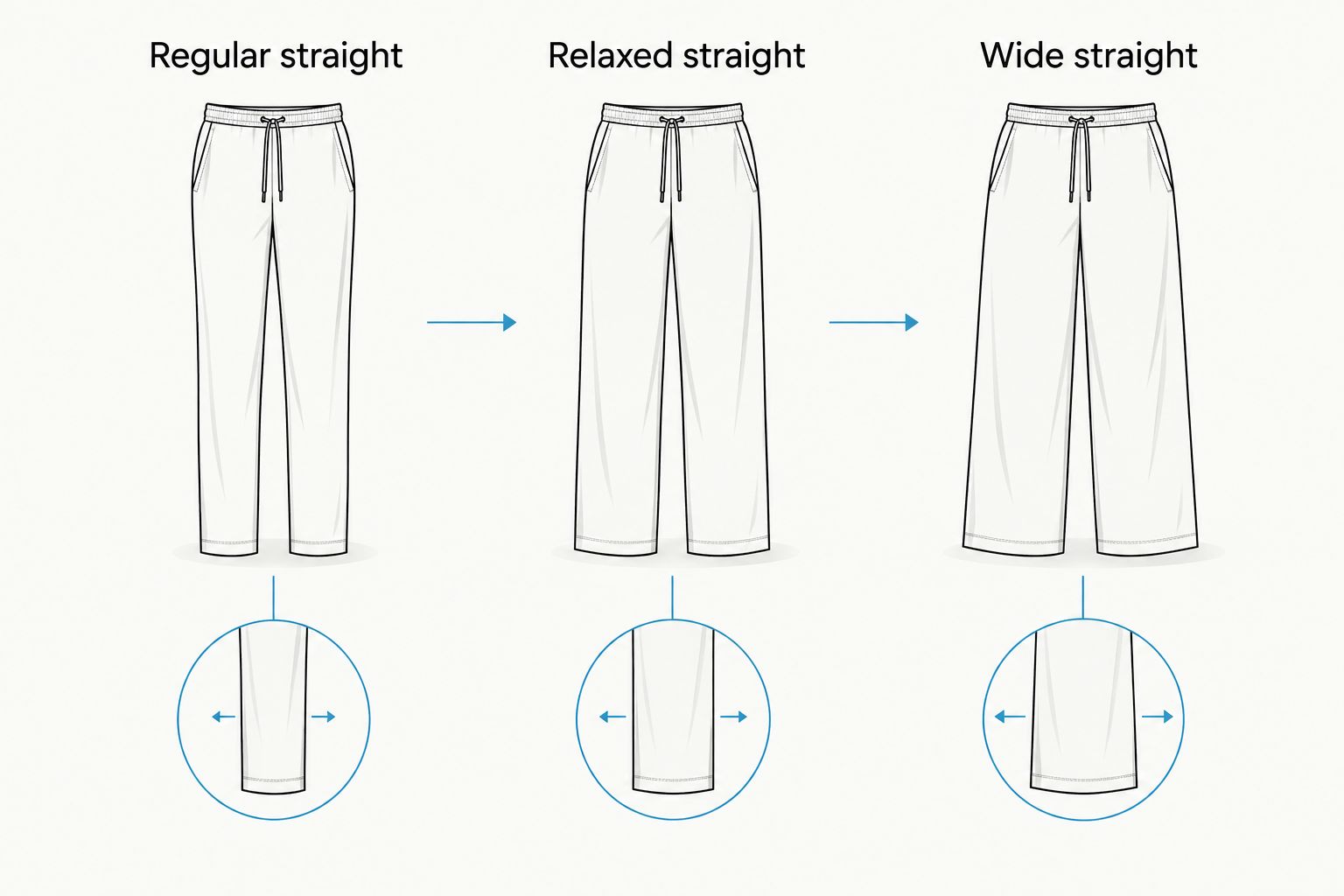
- Relaxed straight leg sweat pants are the default choice for bodybuilders who need thigh room without a wide hem.
- Regular straight-leg sweatpants suit lifters who prefer less fabric around the legs.
- Wide straight-leg sweatpants suit layering, but check the hem around shoes and equipment.
- Physique Bodyware sells bodybuilding apparel, including stringer tank tops and muscle shirts to pair with gym pants.
Why this matters
A waistband that fits does not prove the rest of your sweatpants fit. Your quads, glutes, and seated position all affect how the fabric sits, and a straight lower leg does not automatically mean a roomy upper leg.
Physique Bodyware is best suited to bodybuilders shopping for gym clothes, including stringer tank tops and muscle shirts. Start with the Physique Bodyware catalog, then evaluate pants by their stated cut and measurements rather than assuming every gym bottom is straight-legged.
For your 2026 gym wardrobe, separate two decisions: the shape you want and the fit you need. Straight-leg describes the leg silhouette; it does not establish fabric stretch, material weight, or room through the seat. Those details need their own checks.
What makes the best straight leg sweat pants?
Use these criteria before choosing between cuts. A good pair must work while you move, not just while you stand in front of a mirror.
- Thigh room: The upper leg should accommodate your quads without pulling the waistband down when you bend.
- Seat and rise: The crotch and seat should let you sit and squat without forcing you to adjust the pants repeatedly.
- Waistband stability: The waist should stay in place without requiring an oversized fit everywhere else.
- Hem clearance: The opening should sit clear of the floor and avoid catching beneath your shoes.
- Fabric information: Check the stated composition, care instructions, and stretch details. A cut name does not answer those questions.
- Training use: Choose the amount of fabric that suits your session, your preferred coverage, and any clothing you wear underneath.
Choose thigh and seat room first, then check length. Going up a size to solve tight quads is not a complete solution if the larger pair also leaves you with a loose waist or a dragging hem.
Straight-leg sweatpants at a glance
These rankings compare fit types, not individual product specifications. Each option serves a different preference, so the right choice depends on where you need room and how much fabric you want around your legs.
| Rank | Fit type | Best for | Standout feature | Key limitation |
|---|---|---|---|---|
| 1 | Relaxed straight | Muscular thighs | More room through the upper leg without choosing a deliberately wide silhouette | Relaxed does not guarantee the right waist or rise |
| 2 | Regular straight | Cleaner silhouette | Less excess fabric than a roomier cut | The upper leg needs a careful movement check |
| 3 | Wide straight | Layering | Extra leg volume for clothing underneath | More fabric to manage around shoes and equipment |
The practical distinction is upper-leg volume. Regular straight keeps the outline simpler; relaxed straight adds room; wide straight makes that extra volume part of the overall silhouette. Retailers use fit labels differently, so compare measurements and product photos before treating any label as a fixed standard.
1. Relaxed straight: best straight-leg sweatpants for muscular thighs
Relaxed straight-leg sweatpants are the default recommendation when your quads and glutes need more space than a regular cut provides. The aim is room through the upper leg with a straight outline below it—not an oversized waistband holding up excess fabric.
For bodybuilders choosing straight leg sweat pants in 2026, this is the first fit type to compare. It addresses upper-leg space directly instead of asking you to solve every fit problem by ordering a larger waist size.
Relaxed straight pros
- Gives you a roomier upper-leg option without requiring a wide-leg look.
- Makes thigh and seat space a clear priority during shopping.
- Offers a middle ground between a regular outline and a deliberately loose silhouette.
- Pairs naturally with a stringer tank top or muscle shirt when you want less coverage on top and fuller coverage below.
Relaxed straight cons
- The word relaxed does not establish how much room a particular pair provides.
- A roomy thigh can still come with an unsuitable rise or waistband.
- Extra fabric is unnecessary if a regular straight cut already lets you move comfortably.
Best for: Lifters whose thighs or glutes make regular-cut sweatpants feel restrictive.
What to check before choosing relaxed straight
Look at the front, side, and back views. A straight lower leg cannot compensate for a seat that pulls tight, and a loose front view does not prove the crotch feels comfortable when you sit.
Compare the stated measurements with pants you already wear comfortably. Use the same measuring method as the product listing; a flat garment measurement and a body circumference are not interchangeable.
Physique Bodyware's sweatpants listing is a relevant place to check the current product details. Confirm the listed leg shape and fit before treating that pair as a match for this recommendation.
Verdict: Buy the relaxed straight fit when thigh room is your main problem and the waist, rise, and length also pass your checks.
2. Regular straight: best straight-leg sweatpants for a cleaner silhouette
Regular straight-leg sweatpants suit you when you want a straight outline without the extra volume of a relaxed or wide cut. This option is about reducing excess fabric, not squeezing your legs into a slim fit.
Choose regular straight when your current pants already provide enough seat and thigh room, but you dislike a loose silhouette. Do not choose it just because the standing photo looks sharper; your training position matters more.
Regular straight pros
- Keeps the silhouette simpler than a roomier fit.
- Avoids deliberately wide fabric around the lower leg.
- Gives you a clear alternative to cuffed joggers when you want an open ankle.
- Works as a starting point if your current regular-fit pants already fit through the seat and thighs.
Regular straight cons
- Straight-leg does not guarantee generous quad room.
- Less fabric volume leaves less margin for an unsuitable thigh or seat cut.
- Sizing up for the upper leg can create a separate waist or length problem.
Best for: Lifters who already fit comfortably into regular cuts and want less excess fabric.
What to check before choosing regular straight
Watch for fabric pulling across the thighs when you sit. If the waistband shifts down or the crotch feels restrictive, the clean outline is not a reason to keep the fit.
Check the lower leg separately. A pair can fit well through the quads but still have an opening that sits awkwardly over your shoes. Try it with the footwear you actually train in rather than judging the length barefoot.
A muscle shirt or stringer tank top keeps the outfit straightforward. Physique Bodyware sells both categories, so you can choose your gym top independently rather than letting a matching outfit decide an unsuitable pants fit.
Verdict: Buy the regular straight fit when movement stays comfortable and you prefer a cleaner outline; skip it when the upper leg pulls tight.
3. Wide straight: best straight-leg sweatpants for layering
Wide straight-leg sweatpants make extra leg volume part of the design. This is the option to compare when you want room over a base layer or deliberately prefer a loose silhouette from thigh to hem.
The trade-off is fabric management. More room is useful only if the pants still stay clear of your shoes and the equipment you use. A wide opening that drags is a length problem, not a training feature.
Wide straight pros
- Provides a roomier silhouette throughout the leg.
- Gives you an option to evaluate over the clothing you wear underneath.
- Makes a loose fit intentional rather than relying only on a larger size.
- Suits lifters who dislike a close-fitting lower leg.
Wide straight cons
- Extra fabric needs a careful check around footwear and equipment.
- A wide leg does not guarantee enough seat depth or a suitable rise.
- The silhouette adds volume even when you do not need it for layering.
Best for: Lifters who wear a layer underneath or specifically want a loose, wide outline.
What to check before choosing wide straight
Try the pants over your intended base layer. That combination determines the fit; testing the pants alone leaves the layering question unanswered.
Check the hem while standing, walking, and taking a seated position. The opening should not fold beneath your shoe. If the fabric collects at your heel, resolve the length before using the pants for training.
For a 2026 gym outfit, choose a wide cut because you want its volume—not because a tighter pair failed at the waistband. Those are different fit decisions and need different fixes.
Verdict: Buy the wide straight fit for intentional layering or a loose silhouette; skip it when the hem interferes with your shoes or movement.
How to check the fit before training
Use 3 movements to evaluate a pair: a bodyweight squat, a seated position, and a high-knee step. These are practical fit checks, not a workout or a guarantee that the pants suit every exercise.
Check the squat
Lower into a comfortable bodyweight squat. Notice whether the seat pulls, the crotch feels restrictive, or the waistband shifts enough that you need to readjust it.
A straight-leg silhouette does not fix those problems. If the upper leg fails this check, compare a roomier cut rather than accepting discomfort because the ankle opening looks right.
Check the seated position
Sit on a bench with your feet on the floor. Check the waistband and crotch in 2 positions: upright and leaning forward comfortably.
Look for pulling that was not obvious while standing. You should not have to rearrange the fabric every time you sit down to train or change shoes.
Check the high-knee step
Raise each knee through a comfortable range without weight. Notice whether fabric catches across the thigh or pulls at the opposite side of the waistband.
Then walk in your training shoes. If you are evaluating 1 pair for both lifting and rest days, judge it in both settings rather than assuming standing comfort covers every use.
Straight-leg sweatpants versus joggers
Straight-leg sweatpants and joggers are not interchangeable shape labels. Joggers generally narrow toward the ankle and often have a cuff; straight-leg sweatpants keep a straighter lower-leg outline.
| Option | Best for | Main advantage | Main limitation |
|---|---|---|---|
| Straight-leg sweatpants | An open ankle and straighter silhouette | No need to choose a gathered cuff | Length and opening need checking over shoes |
| Joggers | A tapered outline and contained ankle | A cuff keeps the opening gathered | The ankle shape differs from a straight-leg preference |
Choose the ankle shape you actually want. Do not settle for joggers merely because the listing calls them gym pants, and do not assume an open hem provides more thigh room. Upper-leg fit remains a separate question.
How the fits were ranked
This 2026 ranking puts muscular-thigh accommodation first, followed by waist and rise, hem clearance, and intended use. Relaxed straight is the default because its purpose matches the need for more upper-leg room without a deliberately wide silhouette.
Regular straight wins the cleaner-outline slot. Wide straight wins the layering slot. Neither replaces relaxed straight for every lifter, and no cut earns a recommendation when its actual measurements or movement fit are wrong for you.
Which straight-leg sweatpants should you choose?
Start with relaxed straight if tight thighs are your recurring problem. Choose regular straight when you already have enough upper-leg room and want less fabric; choose wide straight when layering or a loose silhouette is the point.
For your 2026 purchase, check the exact garment details before committing to a fit label. Keep the pants decision separate from the top: Physique Bodyware stringer tank tops and muscle shirts fit the bodybuilding-apparel category, but the pants still need their own waist, seat, and length checks.
FAQ
What's the best straight leg sweat pants fit for bodybuilders?
Relaxed straight is the default fit to compare when muscular thighs make regular cuts restrictive. Confirm the waist, rise, and hem as well; extra thigh room alone does not establish a good fit.
Are straight-leg sweatpants better than joggers for lifting?
Straight-leg sweatpants are better when you want an open ankle and a straighter lower-leg silhouette. Joggers suit a tapered, gathered ankle, so choose the shape you prefer and check movement in either option.
Should I size up sweatpants if I have big quads?
Compare a roomier cut before sizing up solely for your quads. A larger size also changes the waist and length, which can create new fit problems.
How do I know whether sweatpants are straight-legged?
Check the stated cut and the lower-leg shape in product photos. An open hem alone does not prove a straight cut, because open-hem pants can also taper or widen.
What should I check when trying on gym sweatpants?
Check thigh room, seat comfort, waistband stability, and hem clearance. Use a bodyweight squat, a seated position, and a high-knee step to notice pulling that standing still does not reveal.
Can I wear straight-leg sweatpants over a base layer?
Choose a cut that fits comfortably over your intended base layer. Wide straight is the fit type to compare for layering, but test the complete combination rather than the pants alone.
What gym top goes with straight-leg sweatpants?
A stringer tank top or muscle shirt is a straightforward gym pairing. Physique Bodyware sells both categories, so choose your preferred upper-body coverage separately from your pants fit.
One last thing
A dragging hem does not prove the pants are roomy enough for bodybuilding. It proves the length needs attention. Check thigh space and shoe clearance separately, and do not let extra fabric at the ankle distract you from a tight seat or unstable waist.