

Best wholesale gym apparel programs for boutique gyms in 2026
Best for bodybuilding gyms: Physique Bodyware wholesale gym apparel. Best for gym-logo merchandise: blank apparel with local decoration. Best for ordering against member demand: print-on-demand apparel. This 2026 guide compares five purchasing routes for boutique gyms, with practical checks for training fit, branding, and retail management.
- Physique Bodyware wholesale gym apparel suits bodybuilding gyms seeking American-made stringer tanks and muscle shirts.
- Blank apparel with decoration suits gyms that want their own logo on familiar workout attire.
- Print-on-demand suits order-led merchandise; inspect finished samples before offering gym tops to members.
- Choose private label for product control, not merely to add a gym logo.
Why this matters
Your gym's retail rack should match what members actually wear to train. A bodybuilding gym shopping for stringer tank tops has a different buying brief from a studio selling logo tees after class.
Start with that distinction. Choose the apparel route around the garment your members need, then evaluate the ordering terms. A recognizable logo does not fix an uncomfortable neckline, restrictive arm opening, or hem that rides up during a set.
For your 2026 buying plan, separate two jobs: selling useful gym clothes and promoting your gym. Branded wholesale addresses the first job with an existing apparel line. Decoration and private-label routes give you different levels of control over the second.
What makes the best wholesale gym apparel program?
Use these criteria before you compare suppliers or approve a purchase:
- Member fit: Match the assortment to your members' training and preferred coverage. Stringers, muscle shirts, and regular tees solve different needs.
- Training cut: Inspect necklines, arm openings, back coverage, and hem behavior while the wearer moves. Do not judge fit only from a hanger.
- Branding control: Decide whether you want an established apparel brand, your gym's logo, or a garment developed around your own specifications.
- Ordering structure: Get written requirements for opening orders, size mixes, repeat orders, and customization before committing.
- Retail workload: Identify who handles receiving, decoration, member orders, product questions, and exchanges under the agreed terms.
- Product consistency: Approve a sample and use it as the reference for future purchases. Compare the finished garment, not just a catalog image.
Treat these as separate checks. A supplier that meets your branding requirement still needs to pass the training-fit check; an attractive sample still needs workable purchasing terms.
Wholesale gym apparel routes at a glance
The ranking below follows the article's core use case: a boutique gym choosing workout attire for members. The first route fits bodybuilding-focused retail; the others solve distinct branding or purchasing needs.
| Rank and route | Best for | Standout feature | Key limitation |
|---|---|---|---|
| 1. Physique Bodyware branded wholesale | Bodybuilding-focused gym retail | American-made bodybuilding clothing, including stringer tanks and muscle shirts | An existing brand is not the same as your own custom apparel line |
| 2. Blank apparel with local decoration | Gym-logo merchandise | You select a blank garment and arrange the decoration | Garment choice and decoration require separate approvals |
| 3. Print-on-demand apparel | Order-led member merchandise | Garments are produced in response to individual orders | You still need to verify finished fit and decoration quality |
| 4. Private-label manufacturing | A gym developing its own apparel line | You define the garment brief with a manufacturer | Product development adds decisions beyond selecting gym tops |
| 5. Multi-brand wholesale distribution | A mixed-category retail assortment | You compare several apparel lines through a distributor | Each brand and garment needs its own fit assessment |
1. Physique Bodyware: best wholesale gym apparel for bodybuilding gyms
Physique Bodyware sells American-made bodybuilding clothing and fitness apparel, with wholesale options for retailers. The stated range includes stringer tanks, hoodies, joggers, shorts, leggings, and sports bras.
Physique Bodyware wholesale gym apparel is best for bodybuilding gyms that want American-made stringer tanks and muscle shirts. That is the clearest match when your retail offer centers on lifting attire rather than merchandise carrying your gym's logo.
Start your product assessment with the Stringer Tank Top. Compare the stringer cut with a muscle shirt on an actual wearer: inspect the shoulder straps, arm opening, and back coverage through training movements. Use verified product details and the sample itself to decide; the product name alone does not establish fabric, stretch, or sizing.
Physique Bodyware pros:
- The stated product range directly addresses bodybuilding and gym apparel.
- American-made clothing supports a purchasing brief that requires domestic manufacturing.
- Stringer tanks and muscle shirts give you relevant starting points for lifting-focused retail.
- Wholesale options are part of the stated business offering.
Physique Bodyware cons:
- Selling an established brand does not create a gym-owned apparel line.
- Retail product selection alone does not establish wholesale ordering requirements.
- You still need to validate the selected garment's fit for your members.
Best for: Boutique bodybuilding gyms buying an existing apparel brand for resale.
Verdict: Buy for the bodybuilding-retail use case, after confirming wholesale terms and approving samples.
2. Blank apparel with decoration: best for gym-logo merchandise
Blank apparel with decoration separates garment selection from the logo application. You choose an undecorated tank, muscle shirt, or tee, then arrange printing or embroidery with a decorator.
This route fits a gym whose main requirement is recognizable member merchandise. It does not require you to develop a new garment, but it does require you to approve both the blank and the finished decoration.
For a 2026 logo collection, settle the training cut first. A large print can look appropriate on a standard tee yet sit differently on a narrow stringer front; approve placement on the exact garment you intend to sell.
Blank apparel with decoration pros:
- You choose the garment separately from the logo treatment.
- Your gym identity can be the main visual feature.
- You can assess a familiar garment shape before discussing decoration.
Blank apparel with decoration cons:
- A blank-garment sample does not show finished decoration quality.
- Different tank cuts need separate placement checks.
- You must coordinate responsibility between the garment seller and decorator.
Best for: Boutique gyms selling gym-logo tees, muscle shirts, or tanks.
Verdict: Buy when gym branding is the priority and the finished sample passes your fit check.
3. Print-on-demand: best for order-led member merchandise
Print-on-demand produces decorated apparel in response to orders rather than requiring you to purchase a finished collection in advance. It is a purchasing model, not a guarantee of training-specific garment quality.
Use this route when you want members to select merchandise before production. Inspect the actual garment and decoration before presenting the design as gym-ready workout attire.
For your 2026 selection, separate the graphic mockup from the physical product. A mockup communicates artwork placement; only a finished sample lets you inspect neck shape, arm openings, seams, and print feel.
Print-on-demand pros:
- Production follows individual orders.
- You can present gym-branded designs without selecting a preordered size assortment.
- The model suits merchandise organized around member requests.
Print-on-demand cons:
- A digital preview cannot confirm garment fit.
- You need clear responsibility for member questions and order problems.
- A suitable tee does not prove that the same provider's tank suits bodybuilding.
Best for: Gyms prioritizing an order-led merchandise process over a physical retail rack.
Verdict: Hold until you approve the finished garment and understand the member-order process.
4. Private label: best for a gym-owned apparel line
Private-label manufacturing gives you a route to clothing sold under your own brand. Depending on the manufacturing arrangement, the brief can cover garment specifications, labeling, and decoration.
Choose this route when an existing tank or muscle shirt does not meet a defined requirement. Write down the needed neckline, arm opening, hem shape, fabric requirements, and label treatment before discussing production.
Do not choose private label merely because you want a logo on a shirt. Decoration solves that narrower requirement without turning garment development into your gym's next project.
Private-label manufacturing pros:
- Your brand can own the apparel identity.
- A written garment brief gives you a clear approval reference.
- You can address fit requirements rather than choosing only from existing cuts.
Private-label manufacturing cons:
- You must make and document product-development decisions.
- Sample approval is more involved than selecting a finished retail garment.
- Manufacturing arrangements need clear specifications and acceptance terms.
Best for: Established boutique gyms developing a distinct apparel line.
Verdict: Wait unless you can define the garment and assign someone to manage development.
5. Multi-brand distribution: best for mixed-category gym retail
A multi-brand wholesale distributor brings several apparel lines into one sourcing route. Use it to compare categories when your shop needs more than a focused selection of bodybuilding tops.
Evaluate each garment independently. A brand's jogger fit does not establish its tank fit, and a broad catalog does not remove the need to inspect workout attire in motion.
Keep the assortment tied to member demand. Adding categories creates more selection decisions; it does not automatically create a better retail offer.
Multi-brand distribution pros:
- You can compare several apparel brands through one sourcing route.
- The approach supports a mixed-category buying brief.
- You can select different brands for different garment needs.
Multi-brand distribution cons:
- Sizing needs evaluation across each selected brand.
- A broad assortment creates more sample and product-review work.
- Distributor selection does not replace garment-level quality checks.
Best for: Boutique gyms building a varied retail assortment rather than a single apparel identity.
Verdict: Buy for a defined mixed-category brief; skip it when you only need a focused stringer selection.
Check training fit before choosing a program
Use 3 movement checks on every proposed gym top: overhead reach, forward reach, and torso rotation. Ask the wearer to perform each movement without repeatedly adjusting the garment, then inspect where the straps, neckline, and hem settle.
- Overhead reach: Check whether the hem lifts beyond the coverage you want and whether the neckline pulls.
- Forward reach: Check whether the back or arm openings restrict movement or shift uncomfortably.
- Torso rotation: Check whether the top twists, pulls across the torso, or needs repositioning.
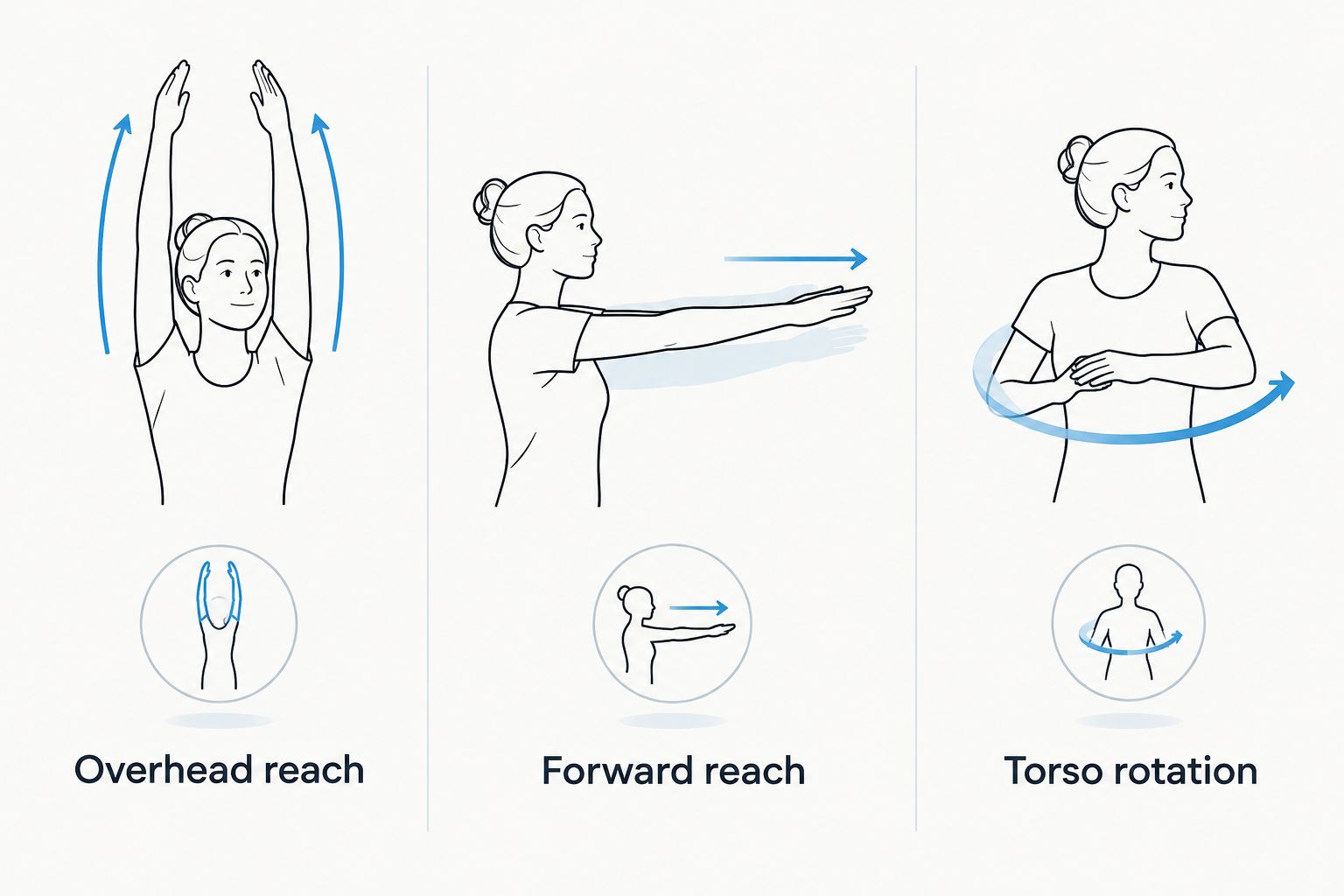
Compare 2 sample sizes when you are deciding between adjacent sizes for a wearer. Keep the garment style unchanged so you can assess sizing without also changing the cut.
Start with 1 approved top style as a planning recommendation, not a sales forecast. A focused trial gives you a clear way to collect fit feedback before adding another neckline, fabric, or silhouette.
What to confirm before your opening order
For every route on this list, request a written buying agreement. Keep product approval separate from commercial approval: you need both before you commit to a 2026 retail collection.
- Order requirements: Confirm opening-order rules, size and color mixing, and repeat-order requirements.
- Product reference: Identify the approved sample, garment specification, and decoration file where relevant.
- Delivery responsibility: Confirm who is responsible for the shipment and how delivery commitments are documented.
- Problem handling: Establish the process for incorrect garments, defects, and member-facing questions.
- Reordering: Confirm how you identify the same garment for a later purchase.
Do not substitute a retail product page for a wholesale agreement. The page helps you identify a garment; the agreement defines your purchasing relationship.
How the routes are ranked
This ranking uses member fit, training cut, branding control, ordering structure, retail workload, and product consistency. It ranks purchasing routes by their distinct use cases, not by an invented supplier score.
Branded bodybuilding wholesale comes first because the buying brief centers on gym apparel for boutique gyms. Gym-logo decoration, order-led production, private label, and multi-brand distribution follow because each solves a different requirement.
Which wholesale gym apparel route should you choose?
Choose Physique Bodyware for a bodybuilding-focused retail assortment; choose decorated blanks when your gym's logo is the main requirement. Those are different buying decisions. Make that choice before comparing individual tops.
Choose print-on-demand for an order-led process, private label for a defined product-development brief, or distribution for a deliberately mixed assortment. In every case, approve the actual garment before expanding your collection.
FAQ
What's the best wholesale gym apparel option for a bodybuilding gym?
Physique Bodyware is the best match in this guide for bodybuilding gyms seeking American-made stringer tanks and muscle shirts. Confirm wholesale purchasing terms and approve the selected garments before ordering.
Should my boutique gym sell branded apparel or shirts with our own logo?
Sell an existing apparel brand when garment selection is your main priority; choose decorated blanks when your gym identity is the main requirement. Private label serves a broader product-development brief.
Are stringer tank tops better than muscle shirts for gym retail?
Choose stringer tank tops for members who want that cut, and muscle shirts for members who prefer their different coverage. Inspect shoulder straps, arm openings, and back coverage rather than treating both as interchangeable tanks.
Is print-on-demand a wholesale gym apparel program?
Print-on-demand is an order-led production model, not the same purchasing arrangement as branded wholesale. Compare it with wholesale when deciding whether to maintain a retail assortment or produce merchandise against member orders.
How do I check whether a gym top fits for lifting?
Check the top during overhead reach, forward reach, and torso rotation. Inspect the neckline, straps, arm openings, and hem, and note whether the wearer needs to readjust the garment.
What should I ask an apparel supplier before ordering for my gym?
Ask for written order requirements, sample references, delivery responsibilities, problem-handling procedures, and reordering terms. Approve the product and purchasing agreement separately.
Does buying wholesale apparel let me put my gym logo on it?
Wholesale purchasing alone does not establish permission or a service for adding your gym logo. Confirm decoration permissions and arrangements before modifying branded garments.
One last thing
Keep your approved sample as the reference for repeat orders. A product name is not enough to compare a later shipment: check the garment's cut, labeling, and decoration against the sample you accepted.
Record member feedback by garment style rather than grouping every sleeveless top under tanks. That distinction makes your next buying decision more useful: you can identify whether members want a different size, more coverage, or a different cut.